- Feedback
- About
- Certificates
- Clientele
- Installations
- Testimonials
- Contact
- Career
- Get Quote


Understand K-Factor for Turbine Flow Measurement

Saeed Lanjekar
12 Feb, 2026
4 Minutes
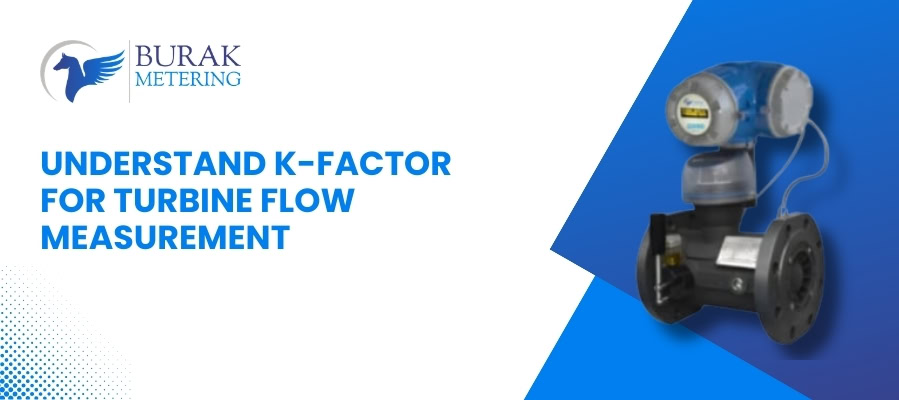
K-Factor is one of the most important values in turbine flow measurement. It links the meter’s pulse output to real flow rate and total volume.
A correct K-Factor gives accurate readings, while a wrong value can create batch errors and unreliable totals.
Contact us for K-Factor calibration and verification.
Understanding K-Factor for Accurate Turbine Flow Measurement
K-Factor tells you how many electrical pulses a turbine flow meter makes per unit volume of fluid. Each meter produces a certain number of pulses for each liter or gallon that passes through it. The output pulses link rotor speed to flow volume.
Every turbine gas meter has a different K-Factor. Small changes in rotor size, bearing friction, and magnetic pickup position make each meter’s K-Factor distinct.
Contact us for turbine flow meter installation support.
You calculate the flow rate by dividing the pulse frequency by the K-Factor. For example, if a meter generates 10,000 pulses per gallon and the frequency is 5,000 Hz, the flow is 0.5 gallons per second.
The K-Factor comes from calibration. The manufacturer or a certified lab passes known fluid volumes through the meter and counts pulses. That test finds how many pulses equal one unit of volume.
Fluid properties affect the K-Factor. Higher viscosity slows rotor motion, which changes how many pulses form per volume. Viscous liquids, like oils, may show a different effective K-Factor than water.
Mechanical wear also changes the K-Factor over time. Worn bearings produce extra friction. This can reduce rotor speed and change pulse output for the same flow.
Contact us for turbine meter service and troubleshooting.
Temperature and pressure alter internal meter dimensions. These changes affect rotor motion and thus the number of pulses per unit volume.
Distorted flow profiles before the meter can skew K-Factor readings. Elbows, valves, or pumps close to the meter can create uneven flow and result in incorrect frequency signals.
Unfiltered fluid can carry debris that alters rotor balance. Deposits on blades change mass and motion, which in turn impacts the K-Factor.
Routine calibration keeps the K-Factor aligned with real conditions. Over months of use, K-Factor can drift enough to change flow totals. Recalibration resets the correct count for use in flow computers and PLCs.
Conclusion
K-Factor is central to precise turbine flow measurement. It converts electrical signals into real flow data. Every meter from Burak Metering comes with a factory-verified K-Factor. Regular calibration preserves accuracy and trust in your recorded flow.
Burak Metering is a top turbine flow meter manufacturer in India. We produce meters built for accuracy and durability in industrial and process applications.
Our team supports installation, calibration, and servicing so your flow data stays reliable.
Burak Metering products and services help you measure flow with confidence and minimize costly errors.
Contact us for help selecting the right meter size.
Share this post


I’m Saeed Lanjekar, founder of Burak Metering. With a background in engineering and technology, I’ve dedicated my career to creating advanced metering solutions that push the boundaries of accuracy and efficiency. At Burak Metering, we’re committed to delivering top-notch technology and driving innovation in the metering industry.
Products
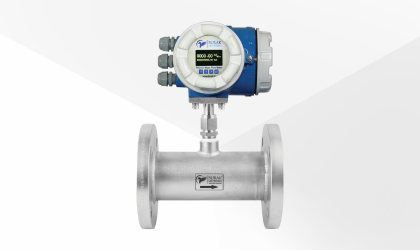
Thermal Mass Flow Meter
Thermal Mass Flow Meter
A thermal mass flow meter is a specialized instrument used to measure the flow rate of gases. It operates by heating a sensor in the fluid's path and…
Learn More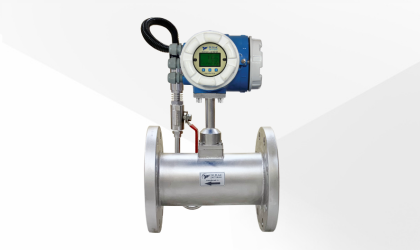
Vortex Flow Meter
Vortex Flow Meter
A vortex flow meter is a sophisticated device used to measure the flow rate of fluids, including liquids, gases, and steam, within pipelines or condu…
Learn More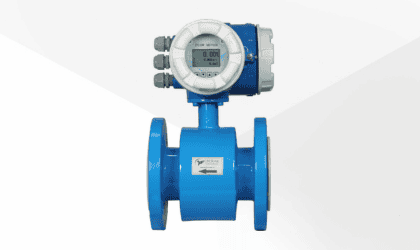
Electromagnetic Flowmeter Manufacturer in India
Electromagnetic Flowmeter Manufacturer in India
Burak Metering is a leading electromagnetic flow meter manufacturer in India, offering precision, reliability, and custom-engineered mag flow measure…
Learn More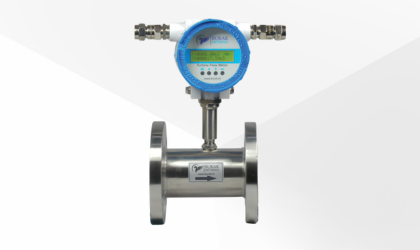
Turbine Flow Meter
Turbine Flow Meter
A turbine flow meter is a precision instrument designed to measure the flow of liquids, typically in a pipeline. It operates on the principle of a fr…
Learn More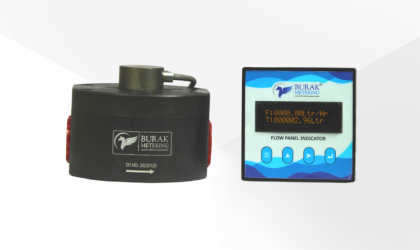
Oval Gear Flow Meter
Oval Gear Flow Meter
The oval gear flow meter is a precision instrument used to measure liquids' flow rate in various industrial applications. It operates on positive dis…
Learn More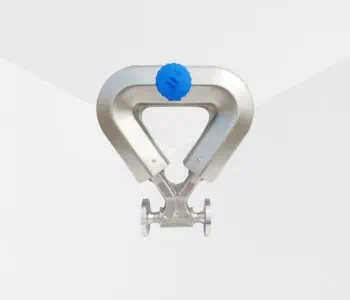
Coriolis Mass Flow Meter
Coriolis Mass Flow Meter
A Coriolis mass flow meter is a highly accurate instrument used to measure the mass flow rate of fluids, including liquids, gases, and slurries. It w…
Learn More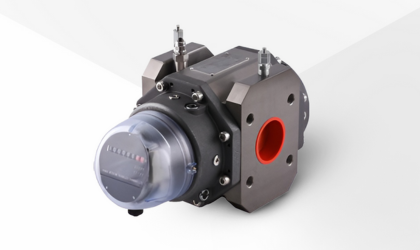
RPD Gas Meter
RPD Gas Meter
The Rotary Positive Displacement (RPD) Gas Meter is a highly accurate and dependable solution for measuring gas flow across a variety of industrial a…
Learn More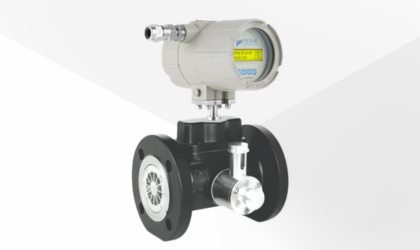
Turbine Gas Meter Manufacturer in India
Turbine Gas Meter Manufacturer in India
As a leading Turbine Gas Meter Manufacturer in India, Burak Metering delivers a highly efficient and accurate solution for gas flow measurement acros…
Learn More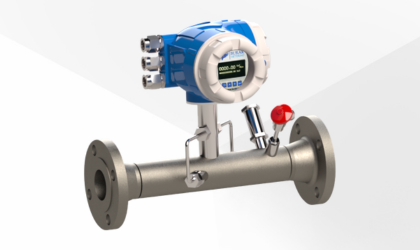
Ultrasonic Gas Flow Meter
Ultrasonic Gas Flow Meter
The BU-7010 Ultrasonic Gas Flow Meter is built for industrial facilities that need accurate, low-maintenance gas measurement. It measures natural gas…
Learn MoreRelated Blogs

 Email
Email
 WhatsApp
 Phone
Phone
Newsletter
Subscribe to our newsletter for updates!