- Feedback
- About
- Certificates
- Clientele
- Installations
- Testimonials
- Contact
- Career
- Get Quote


Vortex Shedding & Eddies Explained: How Vortex Flow Meters Actually Work

Saeed Lanjekar
16 Oct, 2026
9 Minutes
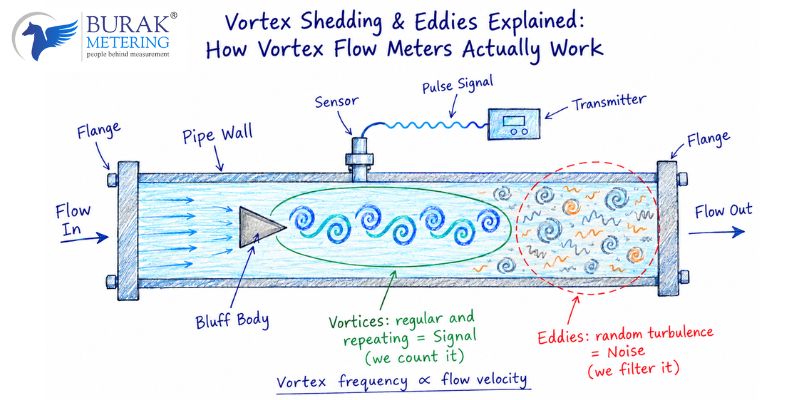
Vortex is described as fluids revolving around the center point, such as water moving around a drain. When an object is placed in flowing fluid, the vortices will be created, while the vortex flow meter converts the movement to a measure of flow. This manual provides information on vortex flow, eddies, and vortex shedding flow meters.
What Is a Vortex?
A vortex is fluid rotating around an axis, such as a whirlpool, a tornado, or the swirl behind a boat. The fluid follows closed, circular paths.
You meet vortices every day:
- Water spiralling down a sink drain
- The swirl in your tea after a stir
- Smoke rings drifting off a blown-out candle
- Wind curling around a tall building
In industry, one swirl is boring. A repeating pattern of swirls is gold, because you can count it. That is where vortex flow measurement starts.
What Is an Eddy? What Are Eddies in Water?
What Is an Eddy: An eddy is defined as a swirling body of water containing a reverse current which is formed due to the formation of turbulence or the presence of any obstruction in the way.
There is a space left in the wake of the object in the flow. The fluid flows in and creates swirls in the edges, resulting in reverse flow towards the object, as the Eddy (fluid dynamics) overview explains.
What are eddies in water: They are easy to spot once you look:
- Rivers: swirls behind large rocks in rapid flow
- Pipes: swirls downstream of valves, elbows, and pumps
- Ocean: mesoscale swirls, which are 10 to 500 km in diameter and last for days to months
Small swirls in your bathtub vanish in seconds. Ocean ones last months. Physics remains the same.
They make good mixers, spreaders of heat, and transporters of pollutants. But when it comes to flow through pipes, turbulence is nothing more than noise for flow meters.
Vortex vs Eddy: What's the Difference?
Vortices are anything that spins, and eddies are the spinning masses of fluid that break off from the mainstream fluid flow. These terms share very much similarity and engineers often switch them without a guilty conscience.
| Vortex | Eddy | |
| Meaning | Fluid spinning around an axis | Swirl or reverse current in turbulent flow |
| Typical cause | Shear or a deliberate bluff body | Obstacles, turbulence, flow separation |
| Pattern | Can repeat in a regular rhythm | Usually random |
| Role in a flow meter | Signal (we count it) | Noise (we filter it) |
Why Does Flow Create Vortices in the First Place?
Fluids cannot always hug the shape of an obstacle. Behind a blunt object, the layer next to its surface separates and curls into swirls. Engineers call this flow separation.
What, then, controls the behavior of the vortex? Just one number - the Reynolds number. This determines the ratio of inertial forces to viscous forces. The former won, leading to turbulence.
For a circular cylinder, the story runs like this:
- Re below about 47: flow stays smooth and no street forms
- Re from about 47 to roughly 190: a neat, regular street of vortices appears
- As to above 190: the flow becomes three-dimensional and messy
- As to above 100,000: shedding becomes chaotic
Industry meters operate at much higher Reynolds numbers than the lab cylinder does. The smart choice of bluff body, like the delta shape, maintains the regular shedding pattern in industry meters. This is why the shape of the meter is more important than its brand.
What Is Vortex Shedding and a Kármán Vortex Street?
The phenomenon where swirls are shed alternately on either side of a blunt body as the fluid moves past it is known as vortex shedding. The stream of vortices thus created is referred to as a Kármán vortex street.
Here are the facts worth knowing:
- The pattern’s naming credit belongs to Theodore von Kármán, although it had been analyzed before by Arnulph Mallock (1907) and Henri Bénard (1908).
- On a circular cylinder, the street becomes steady at about 47 Reynolds numbers.
- Vortex streets of clouds are created by wind around islands up to 400 kilometers long, seen even from space.
- The failure of the Tacoma Narrows Bridge is often attributed to vortices, but the problem was aeroelastic flutter. Vortices are impressive, but not everything in the headlines.
Source: Kármán vortex street.
Where Else Do Vortices Show Up in Real Life?
Fluids encounter an obstruction almost everywhere.
Nature conducts the same experiment on a massive scale, and engineers have taken a cue from the results.
- Singing wires: In 1878, Vincenc Strouhal found out why telegraph wires hum in the wind; his name is commemorated in the Strouhal number.
- Ocean currents: polluted water moves along with the current and, because of whirlpools, debris tends to accumulate in some locations.
- Ocean whirlpools of cold and warm water: warm whirlpools move in an anticyclone pattern; cold whirlpools move in a cyclone manner.
- Rossby waves: such waves can be regarded as eddies as well, however, those are undulatory patterns, lacking closed streamlines like vortexes have.
- Rivers: A calm whirlpool created behind a rock is a typical example of a static eddy caused by flow past a body.
The bottom line is easy. Fluid flow with a body in its path always creates whirls, and a proper flowmeter makes use of that fact.
Why Do Engineers Trust the Strouhal Relationship?
This is because it transforms a random pattern into an exact figure. With a defined bluff body shape, the shedding pattern follows the velocity without any noticeable deviation.
Three practical reasons it earns trust on the plant floor:
- Repeatability: The pulsations are a clear digital signal and not an approximate analog signal.
- Stability: The value of K changes by just 0.5% per 100 K for stainless steel bluff bodies; temperature measurement will help adjust for it.
- Simplicity: Abrasion introduces rounded edges that cause an error of ±0.3% at 2 mm.
Look at the bluff body as a guitar string. Keep it clean, keep it with sharp edges, and keep its pitch!
How Does a Vortex Flow Meter Work?
In a vortex shedding flow meter, there is a Shedder bar inside the pipe, and it counts the vortices it sheds. The higher the flow velocity, the more frequent the shedding, meaning that frequency equals velocity.
What is a shedder bar?
A shedder bar, also known as bluff body, is a solid bar that acts as an obstruction in the pipe and creates swirls in the fluid as it flows past.
Here is the sequence:
- Fluid hits the bluff body.
- Vortices shed alternately from each side, forming a von Karman vortex flow pattern.
- The vortex flow sensor picks up each pressure pulse.
- Then the Vortex flow transmitter translates the pulse frequency into flow and outputs it in the form of 4-20mA, HART, Modbus, or pulses.
f = St \cdot \frac{v}{d}
Here f is shedding frequency, v is fluid velocity, d is the bluff-body width, and St is the Strouhal number.
The clever bit is that St stays nearly constant across a wide flow range. Endress+Hauser places that constant zone above a Reynolds number of 10,000. Inside it, frequency is directly proportional to flow.
Quick illustration: take a bluff body 20 mm wide, water at 10 m/s, and a Strouhal number of about 0.2 (typical for a cylinder). Then f = 0.2 × 10 ÷ 0.02 = 100 Hz. Double the velocity, and the frequency doubles to 200 Hz. That straight-line link is why vortex flow measurement is so tidy.
Each meter is calibrated to a K factor, meaning pulses per unit volume. One example from the same source is 10 pulses per litre.
Want the model-by-model view? Read our vortex flow meter overview.
What Does a Vortex Flow Sensor Actually Detect?
It picks up the small pressure fluctuations generated by each vortex. This is accomplished through a piezoelectric vortex flow sensor, which transforms the strain into an alternating electric current of vortex frequency.
- Piezoelectric sensors: convert each pressure pulse into an electrical signal
- Capacitive sensors: another method of sensing the same pulses
- Moving parts: none, so a vortex meter with no moving parts has nothing to jam or wear out
The fluid does the moving. The meter simply listens.
Where Does a Vortex Meter Work Best?
The above flow meters are suited for clean and single-phase steam, gas, and liquid flow meters. Some of the common applications are:
- Steam vortex flow meter: common, but measures volume; pressure and temperature sensors will help measure mass/energy flow
- Gas: compressed air, natural gas, nitrogen, oxygen, carbon dioxide
- Liquids: hydrocarbons, DM water, condensate, boiler feed water
Water vortex flow meters can also be used on non-conductive/slightly conductive liquids where electromagnetic flow meters may not work.
For details on DM water, refer to: DM water vortex flow meter guide.
When Do Eddies and Other Gremlins Spoil the Reading?
Unplanned flow in the form of eddies from elbows and valves disrupts the vortex formation.
- Low flow: less than Reynolds number 5,000, vortices will be too irregular for measurement. Between 5,000 and 10,000, additional errors come into play.
- Straight piping: provide 10 to 40 diameters of straight pipe upstream and at least 5 downstream. A flow conditioner will reduce the required upstream piping length to around 10.
- Pulsating flow: the meter is unable to distinguish between pulsation and its own signal.
- Bubbles of gas and solids: gas bubbles will give rise to a positive error, and solids may change the K factor.
- High velocities: liquid flow above about 9 m/s is subject to cavitation errors, and gas flow above 75 m/s to high pressure losses.
These things done right, with accuracy up to ±0.75% of reading, are achievable, provided that the Reynolds number remains greater than 20,000. The exact values will depend on the manufacturer, as per the data sheet.
Three Myths About Flow Swirls
- Myth: more swirl means a better reading. Random turbulence adds noise. Regular, bluff-body vortices add signal.
- Myth: One meter handles any flow. Below Reynolds number 5,000, even a good meter gives up.
- Myth: it measures mass directly. It measures volume, so mass needs pressure and temperature data.
Practical tip: if readings look jumpy, check for eddies in water or gas lines caused by a half-open valve just upstream. It is the cheapest fix on the list.
Is a Vortex Flow Meter Right for Your Line? Quick Checklist
- Is the fluid steam, gas, or a clean single-phase liquid?
- Does flow stay above the minimum Reynolds number?
- Do you have room for a straight pipe?
- Do you need 4-20 mA HART, RS485 Modbus, or pulse output?
- Is your flow measurement accuracy target realistic for the pipe layout?
Mostly yeses make it a strong candidate.
FAQs
1. What is a vortex in simple words?
A vortex is fluid spinning around a centre, like water circling a drain.
2. What are eddies in water?
Eddies are swirling pockets of water, with a reverse current, created by obstacles or turbulence.
3. Is an eddy the same as a vortex?
They overlap, but an eddy is usually a turbulent swirl, while a vortex is any spinning flow.
4. Do vortex flow meters have moving parts?
No, the bluff body and the sensor stay fixed, which keeps wear low.
5. Can a vortex flow meter measure steam?
Yes, steam is one of its most common uses, ideally with pressure and temperature compensation.
6. How much straight pipe does a vortex flow meter need?
Plan for 10 to 40 diameters upstream and at least 5 downstream, depending on the obstruction.
Ready for Smart Measurement?
Tell us about your fluid type, diameter, and flow rate range, and we’ll match you with a vortex flow meter from Burak Metering.
Share this post


I’m Saeed Lanjekar, founder of Burak Metering. With a background in engineering and technology, I’ve dedicated my career to creating advanced metering solutions that push the boundaries of accuracy and efficiency. At Burak Metering, we’re committed to delivering top-notch technology and driving innovation in the metering industry.
Products
Models
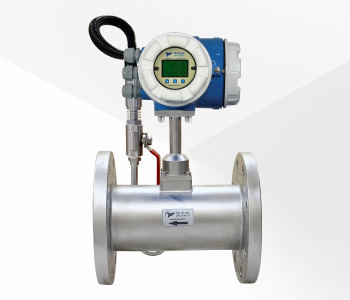
BX-6010-G
Vortex flow meter with temperature and pressure compensation
- For Dry & Wet Gas, Steam Flow
- Inbuilt Temperature & Pressure Compensation
- Pipe Size: 1/2” to 10”
- 4-20mA HART, RS 485 Modbus, Pulse
- Temp: 0 ... +120°C & 280°C optional
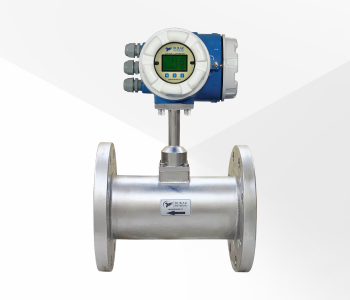
BX-6000-G
Vortex flow meter with Flange connection
- For Water, Solvent, and chemicals
- Wetted Part: SS 304, SS 316
- Mounting: Flanged
- Pipe Size: 1/2” to 10”
- 4-20mA HART, RS 485 Modbus, Pulse
- Temp: 0 ... +120°C
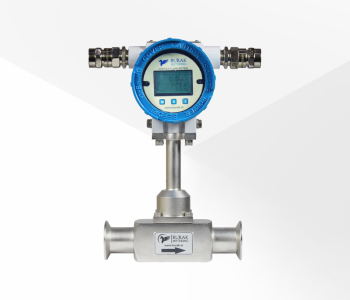
BX-6000-E
Vortex flow meter with Triclover connection
- For DM Water
- Wetted part: SS 316
- Mounting: Triclover
- Pipe Size: 1/2” to 2”
- 4-20mA HART, RS 485 Modbus, Pulse
- Temp: 0 ... +120°C
Related Blogs
 Email
Email
 WhatsApp
 Phone
Phone
Newsletter
Subscribe to our newsletter for updates!