- Feedback
- About
- Certificates
- Clientele
- Installations
- Testimonials
- Contact
- Career
- Get Quote


How Does a Turbine Flow Meter Work?

Saeed Lanjekar
23 Jan, 2026
5 Minutes

A turbine flowmeter measures the rate of fluid flow through a pipeline by converting fluid movement into a rotational signal that can be counted and analyzed.
This type of flowmeter is widely used in industrial settings where accurate flow measurement of liquids or gases is essential.
Basic Operating Concept of Turbine Flow Meter
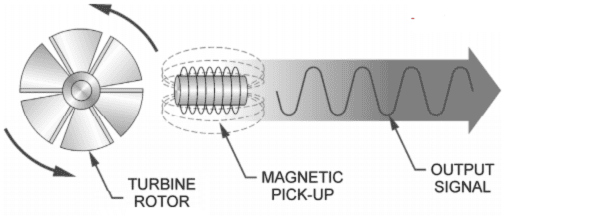
When fluid enters a turbine flow meter, it pushes against angled blades on a rotor fixed inside the meter body. The force of the moving fluid turns the turbine blades on a shaft. As flow increases, the rotor spins faster; when flow decreases, the rotor slows down. The rotor’s rotational speed is directly proportional to the fluid’s flow rate.
Main Components and Their Roles of Turbine Flowmeter
A turbine flowmeter consists of several primary parts:
- Meter Body: Provides the housing that fits into the pipeline and guides fluid through the meter.
- Turbine Rotor: A wheel with blades mounted on low-friction bearings to rotate freely as fluid flows.
- Flow Straighteners: Vanes installed before the rotor that align the fluid and reduce turbulence.
- Sensors (Pickups): Magnetic or optical pickups detect rotation by capturing each blade pass.
- Electronics/Display Unit: Converts sensor pulses into a readable flow rate and total flow.
Each component works together so that turbine speed and flow rate correlate clearly. Higher rotor revolutions produce more pulses per second.
Speak with Burak’s experts to select the right turbine flowmeter for reliable flow measurement.
Step-by-Step Operation of Turbine Flowmeter
- Fluid Entry: Fluid flows into the meter body and hits the flow straighteners. These straighteners smooth out swirls and remove irregular flow patterns before the fluid reaches the turbine rotor.
- Rotor Rotation: The fluid’s kinetic energy pushes against the rotor blades, causing the rotor to spin on its bearings. The speed of rotation depends on fluid velocity. A faster flow produces more rotation; a slower flow produces less.
- Pulse Generation: Sensors outside the meter body detect each blade as it passes. For magnetic pickups, the blade’s embedded magnets cut magnetic lines, causing an electrical pulse. The frequency of these pulses reflects rotor speed.
- Signal Processing: The meter’s electronics convert pulses into flow rate units such as cubic meters per hour (m³/h), liters per minute (L/min), or gallons per minute (GPM). Totalized flow can also be displayed.
Burak Metering’s turbine gas flowmeters use advanced sensor technology to produce stable, accurate pulse signals for precise flow computation in industrial gas and liquid systems.
How Signals Translate to Flow
Every pulse corresponds to a defined volume of fluid passing through the meter. The meter uses a K-factor—a calibration constant that ties pulse frequency to volumetric flow—so that electronic systems can convert pulses into flow rate. This makes turbine flowmeters ideal for systems with digital control or automation.
Where Turbine Flowmeters Are Used
Turbine flowmeters see extensive use across industries:
- Oil and Gas: Metering crude oil, refined fuels, natural gas, and custody transfer applications.
- Chemical Processing: Monitoring flow of liquid chemicals, solvents, and additives.
- Water Treatment: Measuring potable or industrial water flows.
- Pharmaceuticals & Food: Tracking clean liquid flows in batch processes.
- Industrial Gas Systems: Accurate gas volume measurements in processing plants.
Burak Metering’s turbine gas flowmeters excel in applications requiring repeatable, dependable flow data and high measurement precision.
Get in touch with Burak Metering to upgrade your gas flow measurement system.
Strengths and Considerations
Turbine flowmeters offer several advantages:
- Strong Accuracy: A linear relationship between rotor speed and flow rate enables high measurement precision.
- Wide Flow Range: Able to measure a broad range of velocities within one instrument.
- Fast Response: Quick change detection when flow conditions alter
Some limitations include sensitivity to very low velocities and potential wear on bearings or blades if the fluid carries particles. Proper filtration and installation help maintain performance.
Burak Metering provides tailored turbine gas flowmeter solutions with materials and designs suited to your fluid type and operating conditions.
Contact Burak Metering now for trusted turbine flowmeter solutions throughout India.
Summary
A turbine flowmeter measures fluid flow by converting flow velocity into rotational motion and electrical pulses that represent volumetric flow rate. Its simple operating principle, fast response, and strong accuracy make it suitable for gas and liquid measurement across many industries.
With well-engineered rotor design, precise sensing, and stable signal output, turbine flowmeters remain a trusted solution for consistent flow monitoring.
Burak Metering is a top gas flowmeter manufacturer in India that supports reliable measurement, long service life, and dependable performance in industrial environments across India.
Contact Us to learn more about our turbine flowmeters and find the right model for your application.
Share this post


I’m Saeed Lanjekar, founder of Burak Metering. With a background in engineering and technology, I’ve dedicated my career to creating advanced metering solutions that push the boundaries of accuracy and efficiency. At Burak Metering, we’re committed to delivering top-notch technology and driving innovation in the metering industry.
Products
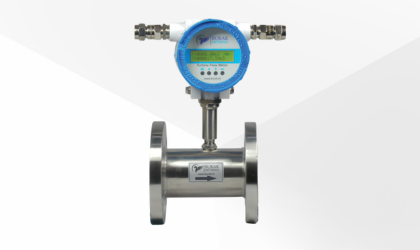
Models
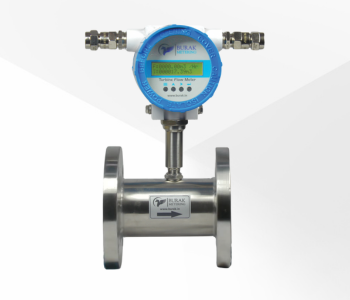
BR-4000-G
Turbine flow meter with flange connection
- For Clean Water, Solvent, and chemicals
- High Accuracy 1% of Reading
- Pipe Size: 1/2” to 6”
- 4-20mA, RS 485 Modbus, Pulse
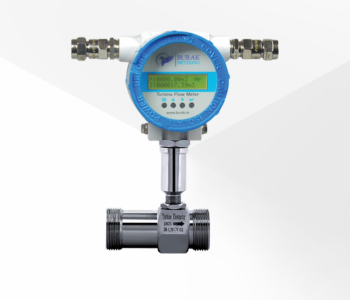
BR-4000-V
Turbine flow meter with screwed connection
- For Clean Water, Solvent, and chemicals.
- Connection: BSP, NPT
- Pipe Size: 1/2” to 2”
- 4-20mA, RS 485 Modbus, Pulse
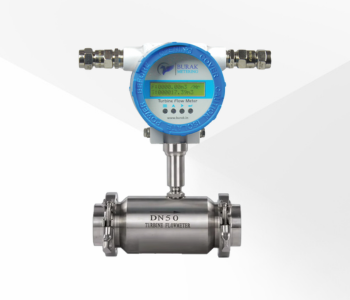
BR-4000-E
Turbine Flow Meter with Triclover Connection
- For Purified Water
- Connection: Tri clover
- Body : SS 316
- Pipe Size: 1/2” to 2”
- 4-20mA, RS 485 Modbus, Pulse
Related Blogs

 Email
Email
 WhatsApp
 Phone
Phone
Newsletter
Subscribe to our newsletter for updates!